

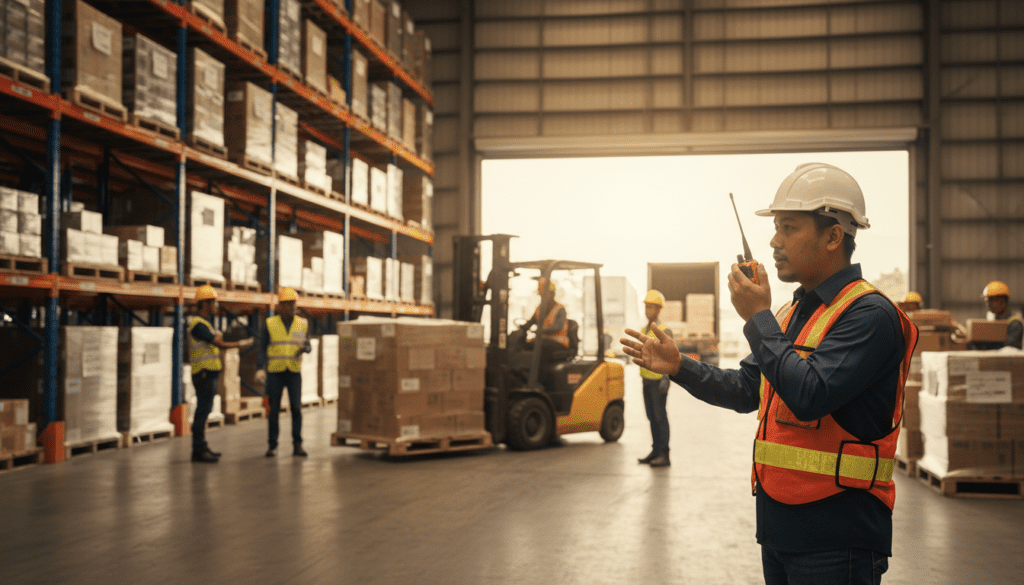
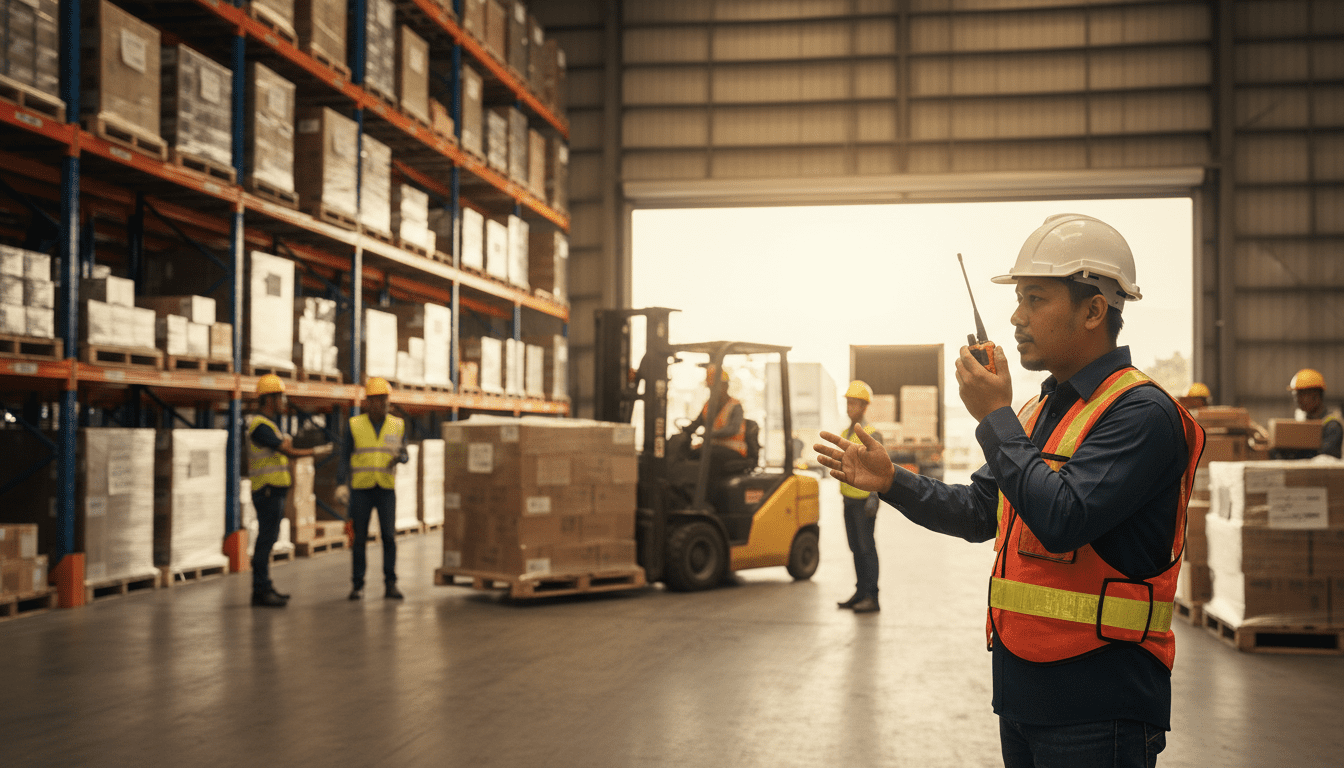
Walkie Talkie for Warehouse Malaysia: Logistics Guide
Plan Malaysian warehouse walkie talkies for receiving, picking, packing, forklift movement, loading bays, security and emergency response.
Map the warehouse before every urgent dispatch call enters one shared channel.
Warehouse radios work best when supervisors can separate receiving, picking, packing, forklift movement, loading bay and security calls. The plan should follow real warehouse zones, shift pressure and safety escalation rules.
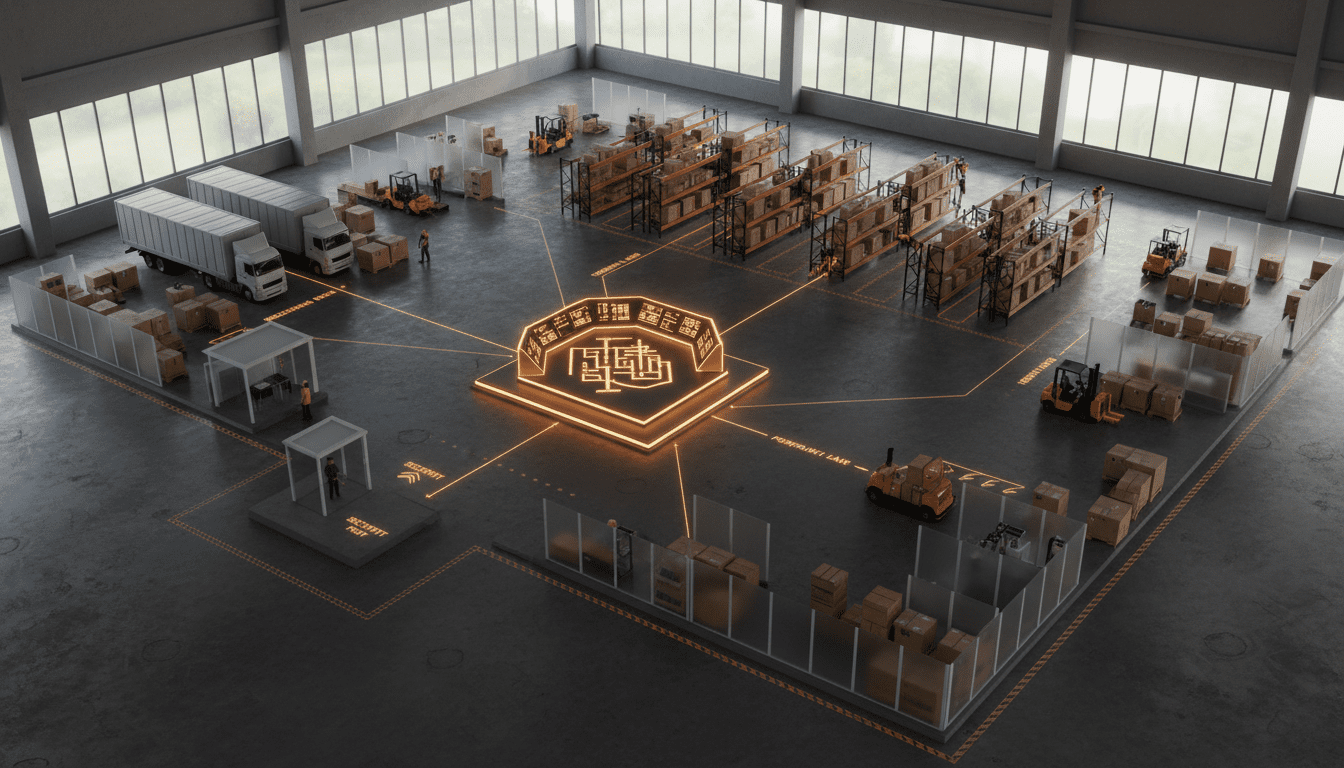
Generated call network
One control point routes daily traffic, support requests and emergency escalation without turning every user into one noisy group.
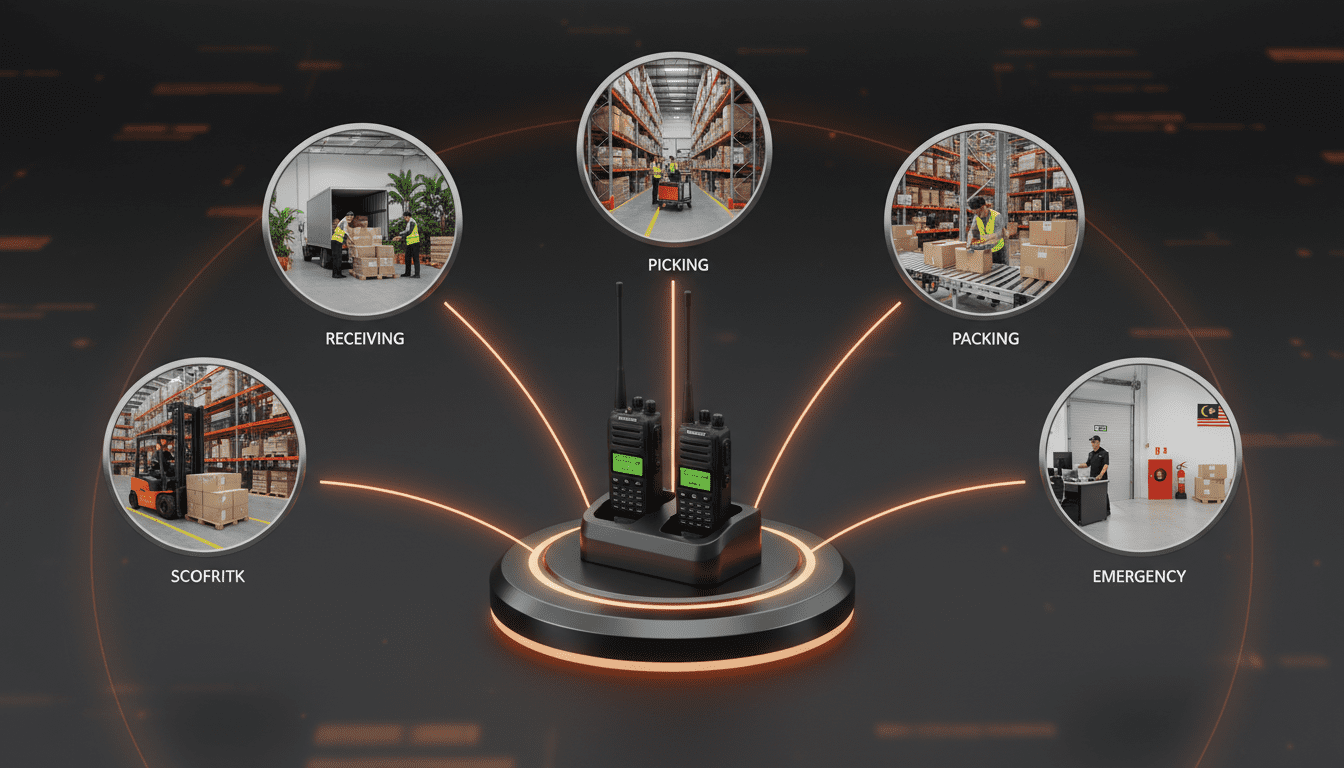
Channel roles
Use the radio memory as named lanes, not as decorative channel count.
What should a warehouse walkie talkie system cover?
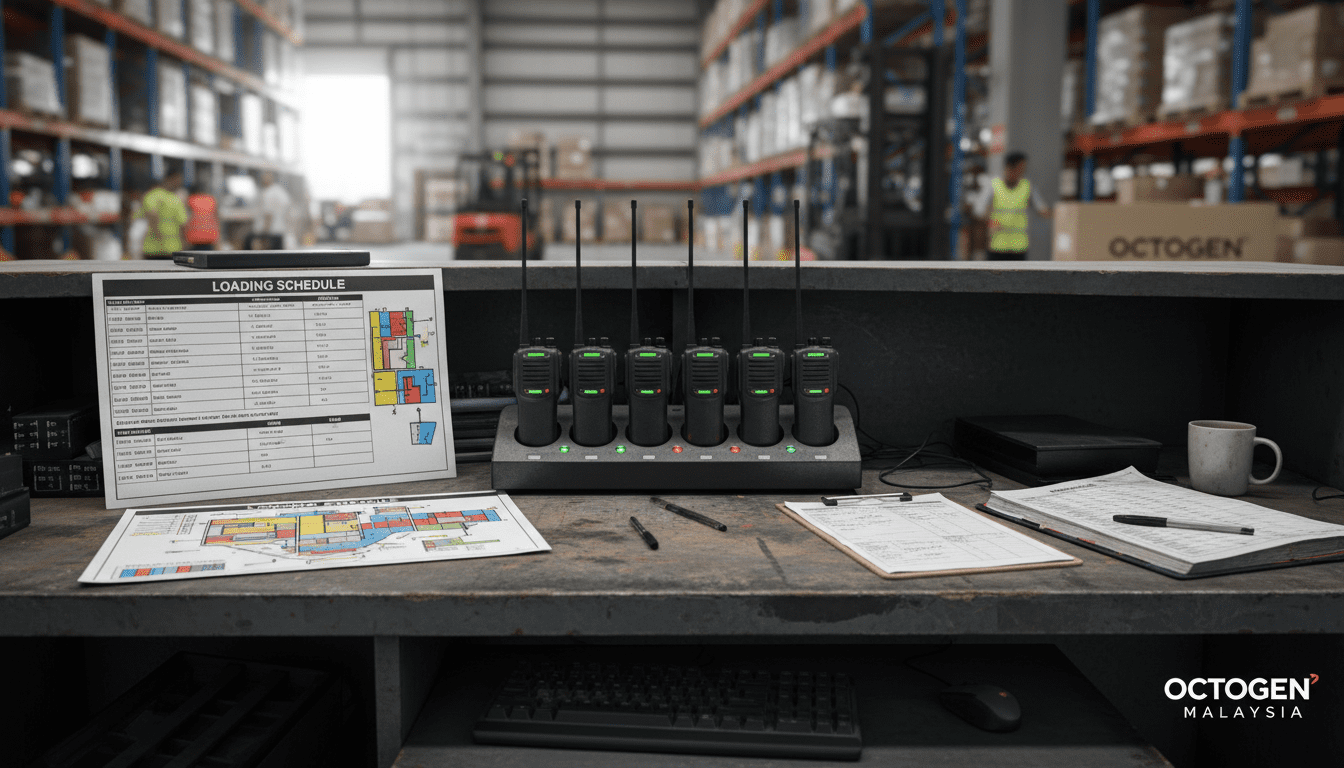
Start with the warehouse supervisor or control desk as the operating point. They need to know which zone needs help, which team owns the call and whether the message belongs on routine traffic or emergency escalation.
For Malaysian warehouses, Octogen usually maps receiving docks, rack aisles, packing areas, loading bays, security posts and forklift lanes before recommending the radio count.
The practical rule is short: role, zone and action needed. Long explanations should move to the warehouse management process, not stay on the radio channel.
- Use role-based call signs such as Receiving, Picking, Packing and Forklift.
- Keep forklift safety calls short and distinct from routine stock updates.
- Place chargers near the actual shift handover point.
- Test rack aisles, dock doors, mezzanine areas and security posts.
Receiving dock and loading bay calls need strict radio discipline
A dock call should identify door, vehicle or zone first, then the action needed. This keeps the channel useful when several trucks arrive close together.
Forklift and loading calls should not be buried under packing chatter. If traffic is high, give dock movement its own channel or a clear call procedure.
Octogen can help create printed channel cards so relief staff and temporary workers use the same names during night dispatch, public holidays and campaign peaks.
| Warehouse situation | First radio path | Close-out rule |
|---|---|---|
| Truck at receiving door | Receiving to Forklift | Confirm bay, pallet count and movement owner. |
| Packing backlog | Packing to Supervisor | Confirm support assigned and next update time. |
| Blocked aisle | Picking to Forklift / Safety | Clear the zone before resuming movement. |
| Security gate issue | Security to Control | Record vehicle or visitor status outside long open-radio detail. |
Rack aisles and mezzanine areas must be tested directly
A radio that works at the supervisor desk may be weak deep inside rack aisles or near dock doors. These are exactly the areas where staff need quick support.
Walk-tests should happen during normal operations, not in an empty warehouse. Forklifts, pallets and metal racks can change how audio feels on the floor.
If one zone is weak, the answer may be different radio placement, a repeater recommendation, or a revised call procedure for that area.
- Test receiving, aisle blocks, packing, loading bay and security post.
- Use zone names that match the warehouse floor map.
- Keep emergency words separate from normal stock movement.
- Log repeated weak spots during the first operating week.
Shift handover needs one charger and spare-unit rule
At handover, returned radios should go straight to charge, weak batteries should be replaced and open tasks should be passed to the next supervisor.
The channel plan should be visible enough for temporary staff, outsourced guards or replacement forklift teams to follow without guessing.
A small number of named lanes is better than many channels nobody remembers under dispatch pressure.
- Label radios by role or duty post.
- Keep spare batteries or spare units at the control desk.
- Review repeated radio confusion with supervisors weekly.
- Confirm every returned unit is charging before shift close.
What should a warehouse logistics walkie talkie system cover?
Start with the control point, not the handset catalogue. The supervisor needs to know which zone needs help, which role owns the call and whether the message belongs on routine traffic or emergency escalation.
For Malaysian warehouse or fulfilment centre with receiving dock, high-rack aisles, picking zones, packing bench, forklift lane, security post and loading bay, Octogen usually maps receiving dock, picking aisles, packing bench, forklift lane, loading bay before recommending radio count, accessories or repeater support.
The practical rule is simple: role, zone and action needed. Long explanations should move to the correct operating process, not stay on the open radio channel.
- Use role-based call signs such as Receiving, Picking, Packing, Forklift.
- Keep sensitive customer, visitor, patient, tenant or staff details off open radio where possible.
- Place chargers where day and night teams actually hand over.
- Test receiving dock, picking aisles, packing bench and forklift lane before rollout.
Real Deployment Notes
A printed warehouse logistics channel card helps relief staff use the same call signs and escalation words as the main team.
After one week, ask which calls were missed, which zones were weak and which channel had too much chatter. Adjust the channel plan before bad habits become normal.
Do not broadcast personal, medical, student, tenant or customer-sensitive details over an open channel. Use the radio to move the right person to the right place.
Common Customer Questions
How many walkie talkies does a warehouse need?
Start with one radio per active duty role: supervisor, receiving, picking, packing, forklift, security and emergency backup. Add spare units for shift handover, temporary crew and peak dispatch periods.
Will radios work between warehouse racks?
They must be tested on-site. High racks, metal stock, dock walls and mezzanine areas can weaken coverage even when the office signal is strong.
Should forklift teams use a separate channel?
Busy warehouses should separate forklift or safety-critical movement from routine packing and stock updates. Smaller sites can combine channels if the call procedure is clear.
Do warehouse teams need speaker microphones?
Speaker microphones often help forklift, dock and security teams because the radio can stay clipped while staff move. Earpieces may suit supervisors or control desk roles.
Is rental or purchase better for warehouse radios?
Purchase usually fits permanent warehouse operations. Rental is useful for seasonal peaks, temporary overflow sites, stocktake events or a trial before buying.
Can Octogen test warehouse coverage before rollout?
Yes. A practical walk-test should cover receiving, rack aisles, packing, loading bay, mezzanine areas, security post and any cold room or metal-dense storage area.
What should we send Octogen for a warehouse radio quote?
Send the warehouse layout, number of users, shifts, dock doors, rack zones, forklift lanes, weak-signal areas and whether privacy, safety or dispatch speed is the main concern.
Ask Octogen About Your Site Coverage
Send Octogen your site layout, user count, shift pattern and receiving dock concerns. The team can recommend a practical radio count, channel plan, accessories and coverage test for Malaysian operations.