

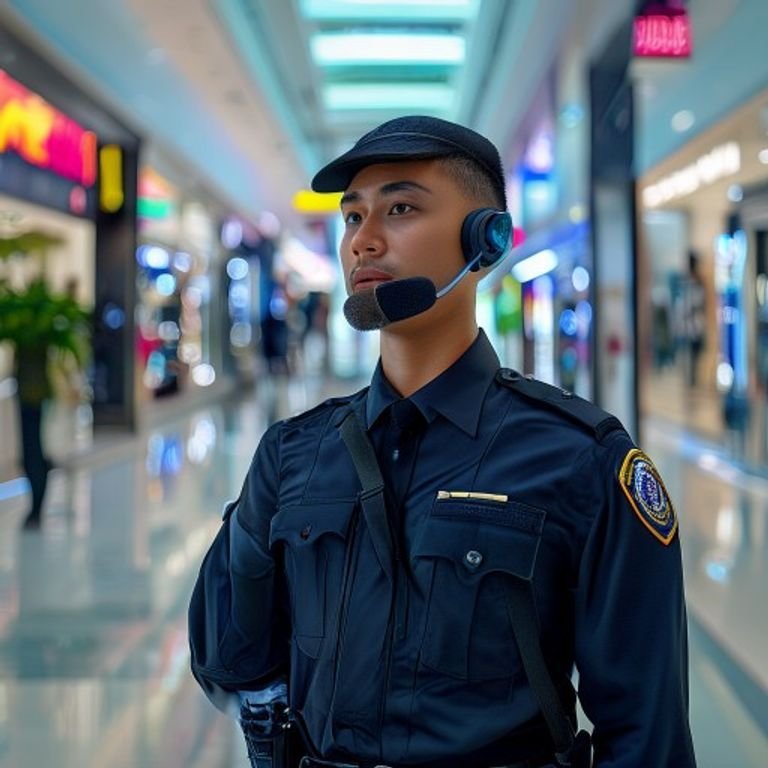
Retail security runs smoother when patrol teams stay connected
Choose two-way radios for Malaysian retail security with earpiece discretion, patrol route checkpoints, and loss prevention floor coverage.
Table of Contents
- Why Retail Security in Malaysia Needs Dedicated Two-Way Radios
- Key Features Security Teams Should Look For
- Setting Up Patrol Routes and Checkpoints
- Coordinating Loss Prevention Without Alerting Suspects
- Coverage Challenges in Malaysian Mall Architecture
- Rental vs Purchase: What Makes Sense for Retail Security
- Compliance and Licensing for Retail Security Radios in Malaysia
- Best Practices for Daily Radio Use in Retail Environments
Why Retail Security in Malaysia Needs Dedicated Two-Way Radios
Malaysian malls and retail stores face unique security challenges. From Pavilion KL to Mid Valley Megamall, Sunway Pyramid to AEON outlets, security teams must cover large floor areas with multiple entry points, parking levels, and back-of-house corridors. Mobile phones are too slow for real-time coordination, and they distract staff from watching the floor.
Walkie talkies solve this with instant push-to-talk communication. A guard spotting suspicious activity near a fire exit can alert the control room and nearby colleagues within seconds, without fumbling for a phone, unlocking a screen, or waiting for a call to connect. In loss prevention, those seconds matter—shoplifters often work in groups, with one creating a distraction while another conceals merchandise. Fast team-wide alerts let security respond before the suspects reach an exit.
The Malaysian retail environment also involves multiple languages. Security teams in Kuala Lumpur and Johor Bahru often include Malay, Chinese, and Indian staff who may prefer different languages for urgent communication. Walkie talkies allow immediate voice contact that overrides language barriers better than text messages, especially in high-stress situations where quick clarification is needed.
Deployment Notes: Target response time: under 10 seconds from incident spotting to team alert Typical Malaysian mall security team: 8–20 officers per shift depending on floor size
Key Features Security Teams Should Look For
Not every radio suits retail security. The best models for Malaysian mall and store environments share several characteristics. First, they need earpiece compatibility. Security guards cannot have radio chatter audible to shoppers—that undermines discretion and alerts potential suspects. Surveillance-style acoustic tube earpieces keep communication private while allowing the guard to hear ambient sounds.
Second, programmable channels matter. A typical setup uses separate channels for: ground floor patrol, upper floor patrol, parking and loading dock, control room, and a management channel. This prevents cross-talk during busy periods and lets supervisors reach specific zones without broadcasting to the entire team.
Third, battery life must survive a full 12-hour shift. Malaysian retail security often runs split shifts covering mall opening hours (10 AM to 10 PM) with overlap periods. Radios that die at 6 PM leave evening patrols unsupported. Look for models with 1,500+ mAh batteries or multi-unit charging docks that keep spare units ready.
Fourth, the radio should survive minor impacts and occasional rain. Guards bump into fixtures, kneel to check under vehicles, and work near loading docks where water exposure happens. IP54-rated models handle dust and light water spray without failing.
Deployment Notes: Earpiece cost: RM 15–35 per unit for acoustic tube style Multi-slot charger recommended: 6-unit chargers cost RM 200–400
Setting Up Patrol Routes and Checkpoints
Random patrols look busy but prove difficult to supervise. Structured patrol routes with timed checkpoints give security managers visibility into floor coverage and help prove due diligence if incidents occur. A typical Malaysian mall divides patrol sectors by: main retail floors, food court and entertainment zones, basement parking levels, rooftop plant rooms, and external perimeter walks.
Checkpoints work best with a combination of physical tags and scheduled radio checks. Guards report position codes every 20–30 minutes: “Alpha-3 to control, checkpoint seven cleared, all quiet.” This creates a documented trail of patrol activity and lets control identify missed checkpoints immediately—possibly indicating a guard needs assistance or has encountered a problem.
During peak shopping periods—weekends, public holidays, and festive seasons like Hari Raya or Chinese New Year—patrol frequency should increase. Checkpoint intervals might drop from 30 minutes to 15 minutes. Security managers use the radio to dynamically redeploy staff: “All ground floor units, reinforce main entrance, crowd building at taxi stand.” Without radio coordination, this kind of rapid repositioning is impossible.
Deployment Notes: Typical checkpoint interval: 20–30 minutes during normal operations, 10–15 minutes during peak periods Patrol route design should avoid predictable patterns that suspects can learn and exploit
Coordinating Loss Prevention Without Alerting Suspects
Loss prevention staff walk a delicate line. They must observe suspicious behavior, coordinate responses, and intercept suspects—without being noticed beforehand. Open radio chatter like “That guy in the red shirt is hiding watches” alerts everyone within earshot, including the suspect.
Professional retail security teams use coded language and whisper modes. Descriptions reference pre-agreed codes: “Unit-4, possible five-seven at menswear, need visual confirm.” The number code describes the behavior type without revealing specifics to bystanders. Whisper mode on modern radios transmits low-volume speech clearly, letting guards speak softly near the suspect without being overheard.
When apprehension becomes necessary, coordination escalates. The observing guard radios for backup with location and suspect description. Backup approaches from multiple angles to prevent escape. Control room staff simultaneously monitor CCTV to capture evidence and warn if accomplices move. This synchronized response depends entirely on radio reliability—any delay or dead zone creates gaps that suspects exploit.
In Malaysian supermarkets and hypermarkets like Giant, Tesco, or Mydin, loss prevention faces additional complexity. Self-checkout areas, wide aisles, and high shelves create blind spots. Security teams use radios to maintain visual coverage across sections, with each guard responsible for a zone and quick alerts when someone moves between zones suspiciously.
Deployment Notes: Code systems should be simple enough for new guards to learn within their first week Whisper mode effective range: typically 70–90% of normal transmit range
Coverage Challenges in Malaysian Mall Architecture
Malaysian malls are not simple boxes. They span multiple levels with escalator voids, underground parking, rooftop gardens, and interconnected walkways to adjacent buildings. Radio signals that cover the main concourse often drop in basement parking, service corridors behind retail units, or elevator machine rooms.
Before deploying a radio system, security managers should conduct a coverage walk-test. A technician with a radio walks every patrol route while the control room logs signal strength and audio clarity. Dead zones get mapped, and solutions get applied: small repeater units in elevator lobbies, antenna relocation in parking levels, or higher-wattage radios for perimeter patrols.
Construction materials affect signal penetration. Concrete walls and steel fire doors in Malaysian malls block UHF signals more than wooden or drywall partitions. Penang’s Gurney Plaza and KL’s Suria KLCC have very different building materials—older malls use more concrete, newer ones use more glass and steel. Each requires tailored coverage planning rather than assuming one radio model fits all.
Parking levels deserve special attention. They are where many incidents occur: vehicle break-ins, tailgating at barriers, and disputes over parking spaces. Guards patrolling parking areas need reliable communication to report incidents and request backup, often while surrounded by concrete pillars and ramps that create signal shadows.
Deployment Notes: Coverage walk-test should test all patrol routes during both peak and quiet hours Repeater installation cost: RM 800–2,500 depending on mall size and existing infrastructure
Rental vs Purchase: What Makes Sense for Retail Security
Retail security managers in Malaysia often debate whether to buy walkie talkies outright or rent them. The answer depends on contract length, team size, and equipment turnover. For long-term security contracts covering the same mall for years, purchasing may prove cheaper over time. A basic UHF radio set with earpieces and chargers costs RM 300–600 per unit. For a team of 12 guards, that’s RM 3,600–7,200 upfront—significant but manageable for established operations.
Rental makes more sense for temporary assignments: pop-up stores, exhibition halls, seasonal sales events, or new mall openings before permanent security contracts begin. Rental rates in Malaysia typically run RM 8–15 per radio per day, including basic accessories. For a two-week event with 10 guards, rental costs RM 1,120–2,100—less than purchase, with no maintenance responsibility.
Rental also avoids obsolescence risk. Radio technology evolves, and models purchased today may lack features that become standard in three years. Rental providers refresh their inventory regularly, so guards use current equipment without the security manager worrying about firmware updates or battery degradation.
Hybrid approaches work too: purchase core fleet radios for permanent staff, rent additional units during peak seasons when temporary guards join the team. This balances capital investment with flexibility, a common strategy for Malaysian retail groups operating multiple mall locations.
Deployment Notes: Typical retail security radio lifespan: 4–6 years with proper maintenance Battery replacement usually needed every 18–24 months under daily use
Compliance and Licensing for Retail Security Radios in Malaysia
All two-way radios operating on designated frequency bands in Malaysia require MCMC (Malaysian Communications and Multimedia Commission) approval. Retail security teams using unlicensed radios risk equipment seizure and fines. The good news: most reputable radio suppliers in Malaysia sell only approved models, and rental providers typically handle licensing paperwork as part of their service.
For purchased equipment, the security manager or facilities department must ensure the radios are type-approved and operating on legally assigned frequencies. Common approved bands for short-range business use include UHF frequencies around 400–470 MHz, with specific channels allocated by MCMC for commercial security applications.
Some large Malaysian retail chains operate private radio networks with repeaters across multiple locations. These require more complex licensing involving frequency coordination and interference studies. The process takes 4–8 weeks and requires professional radio engineering support. Smaller retail stores and individual malls rarely need this level of complexity—standard business radio licenses suffice.
Security managers should keep copies of equipment approval certificates and license documents on file. During MCMC inspections or contract renewals with mall management, these documents demonstrate compliance. Reputable suppliers like Octogen provide documentation packages with every purchase or rental, including MCMC type-approval numbers and frequency assignment details.
Deployment Notes: MCMC license application typically takes 2–4 weeks for standard business radio use Operating unlicensed radios can result in fines up to RM 100,000 under the Communications and Multimedia Act
Best Practices for Daily Radio Use in Retail Environments
Radios only work well when staff use them correctly. Malaysian retail security teams benefit from simple standard operating procedures that every guard learns during induction. First: radio checks at shift start. Each guard powers on, confirms battery level, tests transmit to control, and verifies earpiece audio. Faulty equipment gets swapped before patrol begins—not discovered mid-incident.
Second: channel discipline. Guards stay on assigned channels unless emergency traffic requires switching. Casual conversation belongs on designated break channels, not patrol channels. This keeps patrol channels clear for incident traffic and prevents missed alerts during busy periods.
Third: clear concise language. “Possible shoplifter, electronics section, male, black shirt, carrying blue bag” provides actionable information. Long rambling descriptions waste airtime and confuse recipients. New guards should practice radio speak during training scenarios until brevity becomes habit.
Fourth: proper radio positioning. Belt clips are common, but radios carried at waist level may have reduced transmit performance when the guard bends or crouches. Chest-mounted pouches or shoulder straps improve antenna positioning and keep the radio accessible. Earpiece cables should be routed under the uniform shirt to avoid snagging on fixtures.
Fifth: end-of-shift handover. Batteries get swapped, chargers get checked, and any equipment faults get logged. A guard finishing at 10 PM should brief the incoming night shift about ongoing situations: “Control to night team, be aware we have two suspicious males who left at 9:45, likely to return, last seen heading toward carpark B.” This continuity prevents information loss between shifts.
Deployment Notes: Shift handover radio briefings should last under 2 minutes to avoid patrol gaps Battery swap at shift change prevents mid-shift power failures
Frequently Asked Questions
Do security guards need a license to use walkie talkies in Malaysian malls?
Individual guards do not need personal licenses. The organization operating the radios must ensure the equipment is MCMC type-approved and operating on legally assigned frequencies. Reputable suppliers and rental companies handle this licensing. Security managers should keep approval certificates on file for compliance demonstrations.
How many radios does a typical Malaysian retail security team need?
Most teams need one radio per on-duty guard plus two to three spares for charging rotation and backup. A 12-guard shift typically operates with 12 active radios and 3 spares on chargers. Additional units may be needed for management, control room operators, and maintenance staff who need occasional coordination access.
What is the difference between UHF and VHF radios for retail security?
UHF (Ultra High Frequency) radios at 400–470 MHz work better indoors and in built-up environments because their signals penetrate walls and floors more effectively. VHF (Very High Frequency) radios at 136–174 MHz perform better over open ground and long distances but struggle inside malls with concrete construction. Malaysian retail security almost exclusively uses UHF.
Can walkie talkies work in underground parking areas?
Standard radios often experience dead zones in basement parking due to concrete walls and steel reinforcement. Solutions include: coverage testing before deployment, repeater units installed in elevator lobbies or stairwells that connect to parking levels, and higher-wattage radios for parking patrols specifically. A proper coverage survey identifies problem areas before they cause communication failures during incidents.
How much does it cost to rent walkie talkies for a retail security contract?
Rental rates in Malaysia typically range from RM 8 to RM 15 per radio per day for standard UHF business radios with basic accessories. A month-long contract for 12 radios costs approximately RM 2,880–5,400. Longer contracts often qualify for discounted rates. Rental includes equipment maintenance, battery replacement, and MCMC compliance documentation.
What earpiece style works best for discreet retail security communication?
Acoustic tube earpieces with push-to-talk buttons on the cable provide the best balance of discretion and usability. The tube transmits audio directly to the ear canal while the microphone picks up speech clearly even when whispered. Avoid bulky over-ear headsets that visible to shoppers. Surveillance-style transparent tubes are nearly invisible from more than two meters away.
How do security teams prevent radio interference from neighboring stores?
Channel planning prevents interference. Malaysian malls often house multiple tenants each with their own security or operations radios. MCMC frequency assignments and channel programming should ensure your team’s frequencies do not overlap with adjacent tenants. Digital radios with coded squelch provide additional protection by ignoring transmissions that lack the correct code. Professional radio suppliers conduct interference assessments as part of deployment planning.
Should retail security radios have GPS tracking built in?
GPS is useful for large outdoor retail parks or hypermarket complexes where guards patrol extensive grounds. For indoor mall environments, GPS signals rarely penetrate building interiors accurately, making the feature less valuable. Some modern radios include indoor positioning via Bluetooth beacons or WiFi triangulation, but these add cost and complexity. Most Malaysian mall security teams prioritize reliable voice coverage over location tracking.
What training do new security guards need for radio use?
New guards need training on: power on/off and channel switching, proper earpiece fitting and microphone positioning, concise message structure using the five Ws (who, what, where, when, why), channel discipline and emergency procedures, battery monitoring and end-of-shift handover protocols. This training typically takes 2–4 hours and should include practical scenarios.
How long do walkie talkie batteries last during a retail security shift?
Standard lithium-ion batteries for business radios last 10–14 hours under typical patrol use with moderate transmit activity. Heavy use during incidents with frequent transmission may reduce this to 8–10 hours. Multi-slot charging docks that keep spare batteries rotated solve this: guards swap batteries at shift change, and depleted batteries charge during the next shift. Battery life degrades after 18–24 months of daily use, at which point replacement is recommended.
Deployment Notes
Octogen Malaysia provides MCMC-compliant walkie talkie rental for retail security teams across Kuala Lumpur, Selangor, Johor Bahru, and Penang.
Coverage surveys, repeater installation, and channel programming included with all retail security contracts.
Article covers: Pavilion KL, Mid Valley Megamall, Sunway Pyramid, AEON, Giant, Tesco, Mydin, Gurney Plaza, Suria KLCC.
Published 2026-05-05. Walkie talkie rental inquiries: https://octogen.my/walkie-talkie-rental/