

Condo Walkie Talkie Malaysia: Guardhouse Operations Guide
Plan walkie talkies for Malaysian condominium guardhouses, patrol teams, management office, cleaners, maintenance and visitor access control.
Map the condo before adding more radio noise.
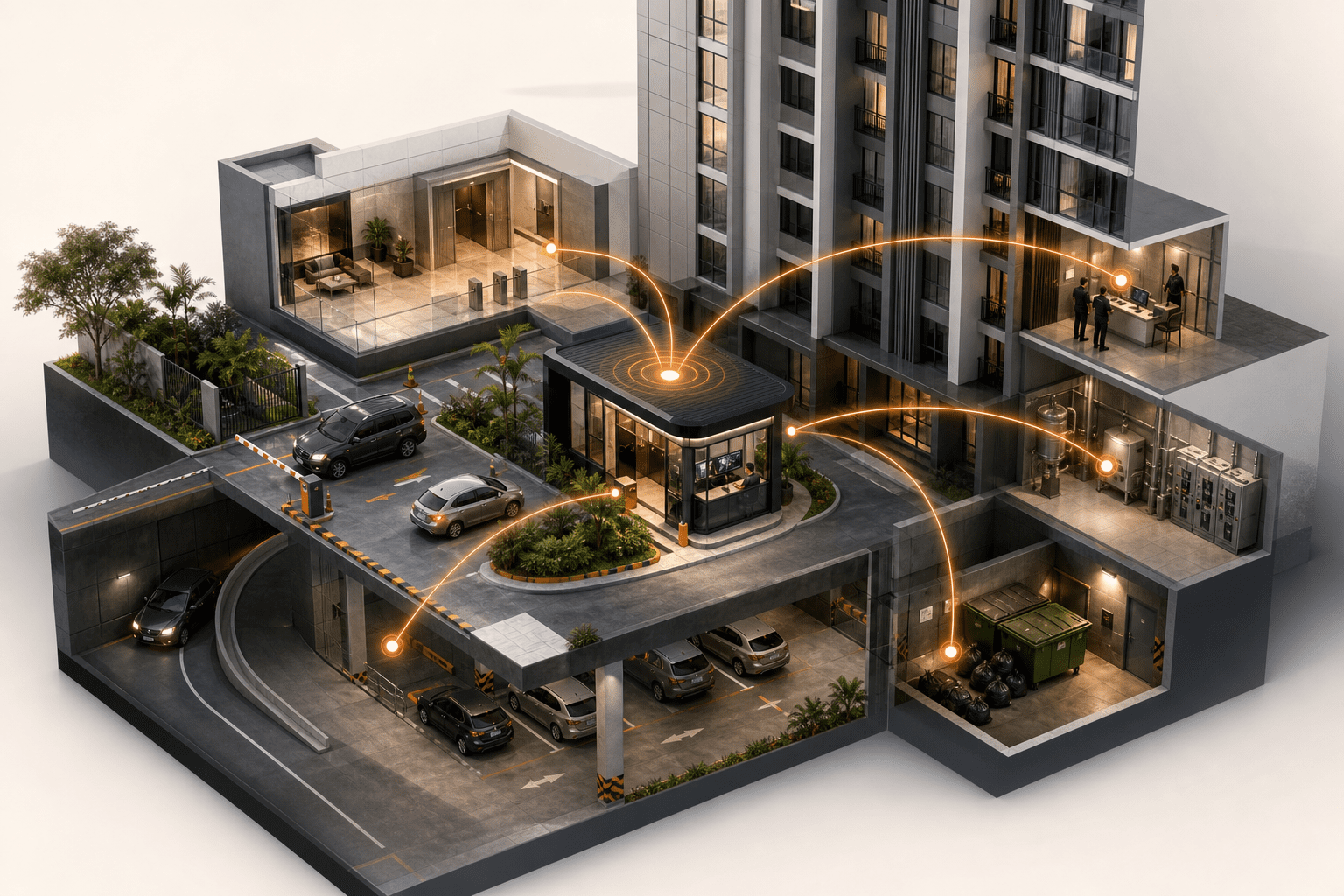
For a condominium, the useful radio plan starts with where calls actually happen: guardhouse, visitor lane, tower lobby, car park, facilities floor and refuse room. The generated atlas shows those zones as a physical site, so the radio plan feels like a deployment map instead of a fake dashboard.
Generated call network
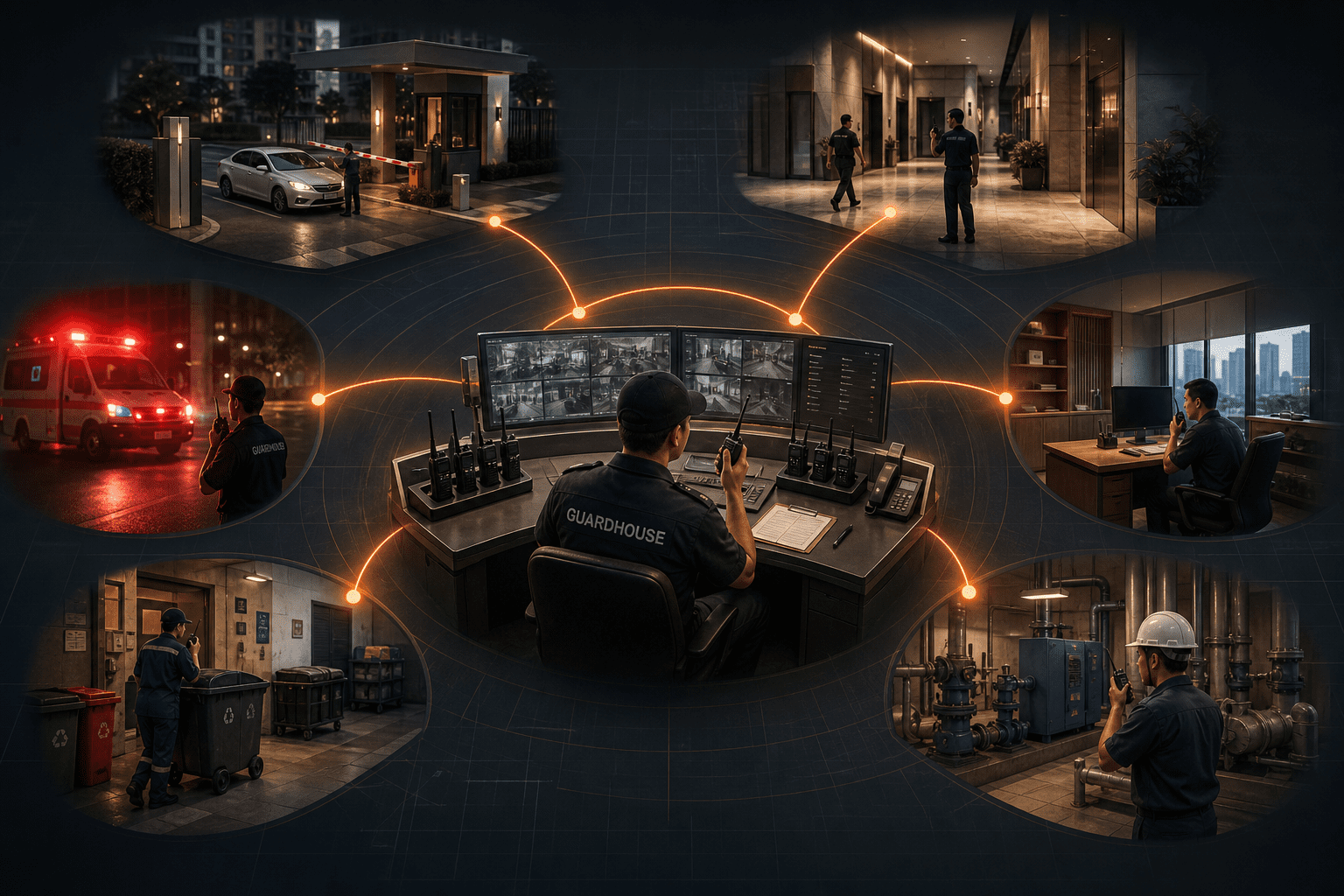
The guardhouse stays as the control point. The image replaces the old CSS node map with a visual story of real radio lanes across visitor access, patrol, maintenance, cleaner and emergency scenes.
Channel roles
Use channels as working agreements. The label should tell a guard where the message belongs before the first call is made.
What should condominium walkie talkies cover?
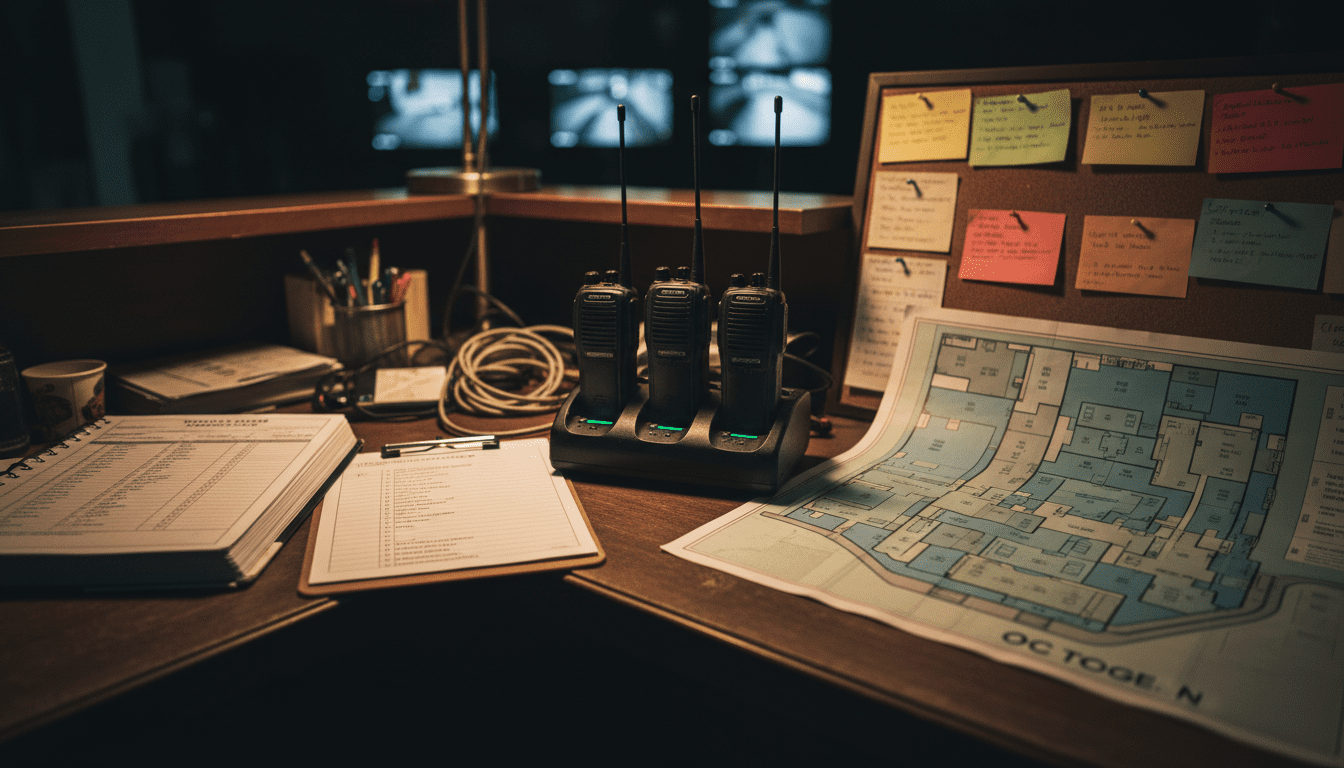
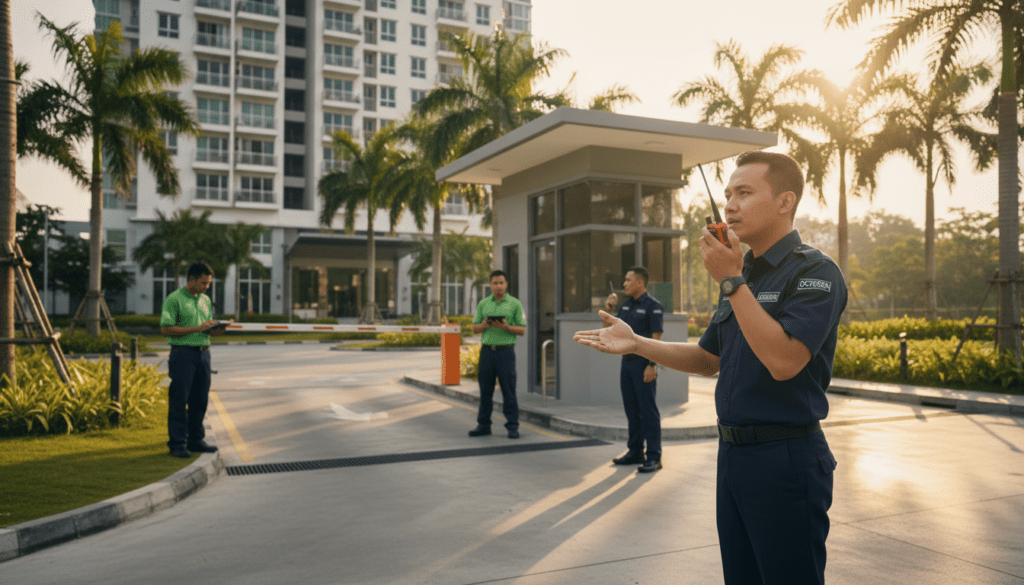
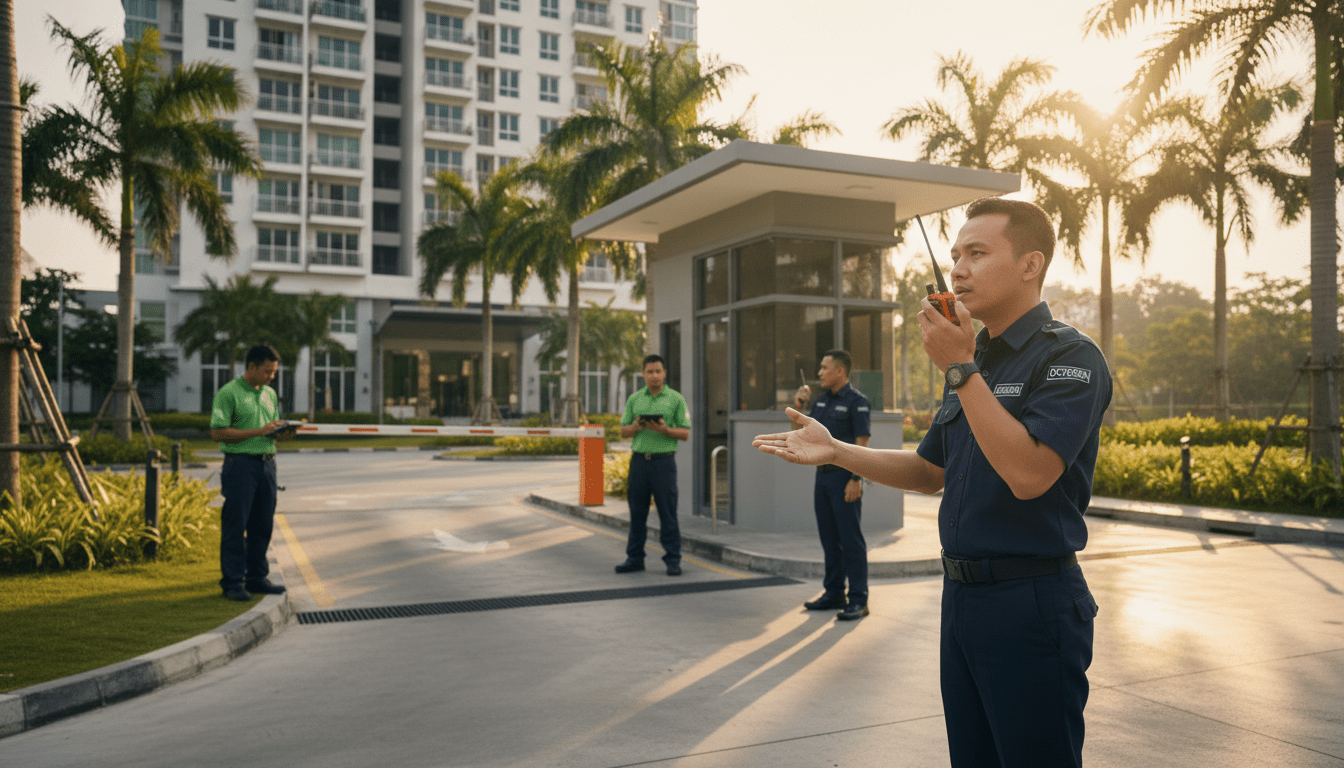
The guardhouse is usually the control point. It receives visitor issues, resident complaints, delivery questions, patrol updates, contractor arrivals and emergency calls, often while guards are still managing the entrance lane.
For Malaysian condominiums, Octogen usually maps the guardhouse, tower lobbies, car park levels, lift areas, facilities floor, refuse room, management office and any known weak phone area.
A good setup lets the guardhouse reach patrol or maintenance within 2 minutes while keeping messages short: role, zone and action needed.
- Use role-based call signs such as Guardhouse, Patrol, Management and Maintenance.
- Keep resident names, unit numbers and private details off open radio where possible.
- Place spare batteries at the guardhouse or management office.
- Test coverage from guardhouse to basement car park, lift lobby, facilities floor and refuse room.
Visitor access calls need short guardhouse scripts
The radio script should help guards ask for support without leaving the entrance or holding up the lane. Use location and role, not private resident details, when asking patrol or management to check something.
For example, Guardhouse to Patrol, check Tower B lobby, or Guardhouse to Management, contractor at visitor lane needs approval. Keep the message operational and move private details to the right process.
If the condo has multiple entrances or delivery points, each location should have a simple name that all guards and relief staff use consistently.
| Situation | Radio path | Privacy rule |
|---|---|---|
| Visitor lane backed up | Guardhouse to Patrol | Use lane or lobby name, not resident details. |
| Delivery needs access | Guardhouse to Management | Confirm process outside open radio if needed. |
| Contractor at gate | Guardhouse to Maintenance / Management | Use contractor role and location only. |
| Aggressive visitor | Guardhouse to Patrol / Emergency | Move support fast without narrating details. |
Patrol and car park coverage must be tested directly
A radio that works near the guardhouse may be weak at basement corners, motorcycle bays, lift cores or back-of-house corridors. These are also the places where guards may need support quickly.
Octogen should test the 5 practical zones: guardhouse, lobby, car park, facilities floor and refuse room. If one zone is weak, the plan may need different radio placement, patrol procedure or repeater advice.
Patrol calls should be short: zone reached, issue found, support needed and close-out. Long explanations block urgent calls and make logs harder to maintain.
- Test basement coverage during normal parked-vehicle conditions.
- Use tower, level and zone names that match signage.
- Keep emergency words distinct from routine patrol updates.
- Record repeated weak spots after the first week.
Maintenance and cleaner calls should protect resident experience
The guardhouse should be able to call cleaners or maintenance without searching for phone numbers while residents wait. Radios help when the issue is location-specific and needs quick attendance.
Define which calls go to cleaners and which go to maintenance. This avoids vague broadcasts such as anyone nearby, please check, which often wastes time.
For a 12-hour security shift, charger placement and spare unit handover matter. The night team should not inherit weak batteries from the day team.
- Use issue categories such as spill, lift, lighting, access door or refuse room.
- Confirm arrival and close-out to the guardhouse.
- Keep one spare radio for temporary contractors or cleaners.
- Review repeated maintenance calls with management weekly.
Emergency escalation and shift handover need one rule
Emergency radio traffic should move support without broadcasting unnecessary resident-sensitive details. The first message should identify the role, location and help needed.
For example, Emergency Support to Guardhouse, attend Tower A lift lobby now is enough to move the response team. More sensitive details should continue through the correct private or in-person process.
At handover, guards should return radios to charge, record weak coverage areas, and pass open incidents clearly. This keeps the next shift from inheriting silent failures.
- Train the exact emergency phrase across all shifts.
- Keep emergency traffic separate from routine cleaner calls where possible.
- Label radios by role or unit number.
- Confirm every returned unit is charging before shift close.
Real Deployment Notes
A printed condo guardhouse ops channel card helps relief staff use the same call signs and escalation words as the main team.
After one week, ask which calls were missed, which zones were weak and which channel had too much chatter. Adjust the channel plan before bad habits become normal.
Do not broadcast personal, medical, student, tenant or customer-sensitive details over an open channel. Use the radio to move the right person to the right place.
Common Customer Questions
How many walkie talkies does a condominium need?
Start with guardhouse, patrol guard, management office, maintenance, cleaners and one spare unit. Larger condos may need more units for multiple towers, basement patrols, facilities staff or night shift handover.
Will radios work in basement car parks?
They must be tested. Basement walls, lift cores, ramps and parked vehicles can reduce coverage. Octogen should walk-test the car park before confirming the final setup.
Can guards discuss resident details over radio?
Keep radio messages operational. Use role, location and action needed. Avoid broadcasting resident names, unit numbers, phone numbers or private complaint details over an open channel.
Do condo guards need earpieces?
Earpieces are useful for guardhouse and patrol roles when public speaker audio may disturb residents or reveal operational chatter. Speaker microphones may suit maintenance or car park patrol better.
Should cleaners and maintenance share the same radio channel?
Small condos can share one support channel if traffic is light. Larger condos should define separate call paths or channel rules so cleaning requests do not block urgent maintenance or security calls.
Is rental or purchase better for condominium radios?
Purchase usually fits permanent condo operations. Rental is useful during renovations, annual meetings, temporary security upgrades or a trial before committee approval.
Can a condo use walkie talkies for emergency response?
Yes, for moving guards and support staff quickly. Radios should not replace emergency services, but they help the on-site team coordinate the first response and guide help to the right zone.
What should we send Octogen for a condo radio quote?
Send the number of towers, car park levels, guard posts, facilities areas, staff roles, shift hours, weak coverage zones and whether privacy, earpieces or emergency escalation is the main concern.
Ask Octogen About Your Site Coverage
Send Octogen your site layout, user count, shift pattern and visitor access concerns. The team can recommend a practical radio count, channel plan, accessories and coverage test for Malaysian operations.